
How the adult heals the inner child
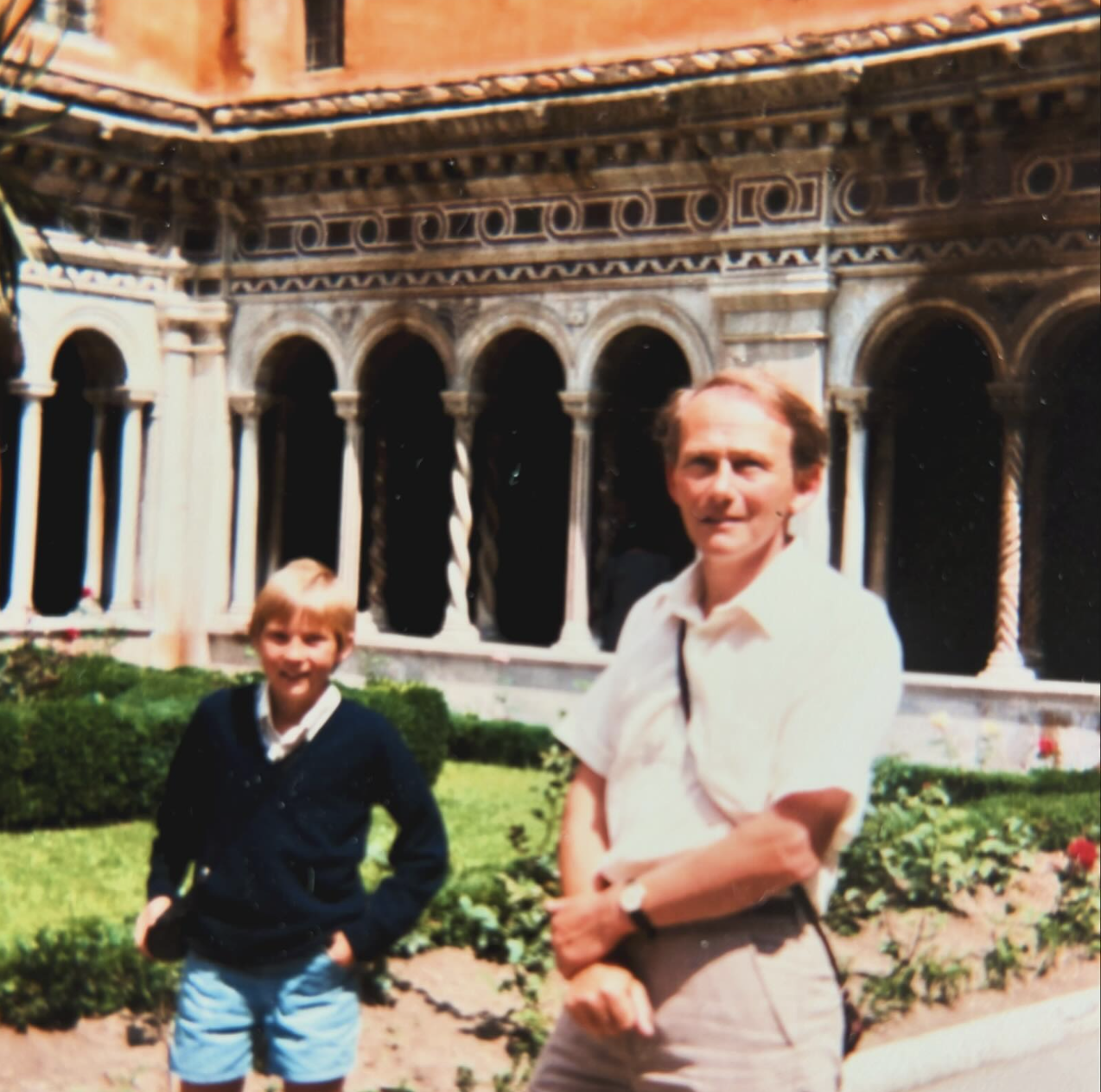

A bridge through time
If you’ve been working in therapy for a while, a time will likely come where two seemingly opposing realities will meet in a profoundly healing way.
Firstly, through the ongoing process of exploration, reflection and psychoeducation that we build together, the adult self who sits in the room with me each week will have developed significant insight into the early woundings that influenced their distress or difficulties in adulthood.
At the same time, sufficient safety and trust will have been developed within the therapeutic relationship that the same adult will feel themselves to have grown into a big enough container to “hold” the overwhelming feelings of their wounded child part. Which means the child’s wounding can be witnessed by a safe, unflinching adult, who also happens to be the same person.
This is quite a meeting.
It tends to happen organically — rather than being deliberately brought about. The mechanism is something like this: the client surfaces in session a situation they have recently lived, in which they experience a troubing and difficult emotion, which we explore. I notice the pattern, a link to something the client has already told me about their childhood, as though a very old experience is being relived. I express this to the client. I might say something like, “This reminds me of something you felt in your childhood …” or “I feel like you’ve told me about this feeling before, when you were little …” The client will often then tell me about a very specific event and have access to what they were feeling at that time, with the key difference of now being able to articulate the feeling with the words of an adult.
At moments like that I tend to say the adult has become the person their own child self needed—and so they can offer healing to that child. We use a well-understood therapeutic technique to meet the child’s needs, not only healing the person’s future but also their past. I might encourage the adult to speak to the child: what does this child need to hear now? And they might say something like: this is not your fault, you are not alone, I’m right here with you, you’re safe …
What’s actually happening?
How can this be? Well, this is possible because in that moment the adult person is able, through embodied memory, to re-inhabit the child’s body (this is sometimes referred to as an affect bridge). Cells “remember” the sensations and feelings, but we can become very adept at partitioning off difficult, painful and overwhelming sensations. When no one helped us regulate and integrate a difficult experience, it remains “trapped” in our organism, still exerting the same arousal force. What we’re looking to do in that moment is safely re-integrate them, so the whole person can return to a calm state.
It may sound a little woo-woo, but aside from the “affect bridge” being a well-documented and well-understood technique that’s been around for longer than I have, there’s significant precedent for this kind of temporal experience in various literatures, suggesting a deeper, broader and more universal human experience is at play.
Let’s look at a few:
Autobiographical accounts
- Carl Jung’s Red Book describes numerous instances of communication across time, including visions of future and past selves
- Indigenous shamanic traditions consistently describe time as circular rather than linear, with healing work occurring across temporal boundaries
- Near-death experience literature frequently includes encounters with past/future selves offering guidance
Quantum consciousness theories
- Physicist David Bohm’s “implicate order” suggests all moments exist simultaneously, potentially accessible under certain conditions
- Rupert Sheldrake’s “morphic resonance” proposes that patterns can influence across time and space
- Dean Radin’s consciousness research documents numerous cases of precognitive experiences
Psychological frameworks
- Carl Jung’s concept of synchronicity includes meaningful coincidences that transcend linear causation
- Transpersonal psychology recognises experiences that exceed ordinary temporal boundaries
- Trauma therapy ( cf Peter Levine, Bessel van der Kolk) increasingly acknowledges how healing can occur “retroactively” – adult healing affecting childhood memory
Literary precedents
- Proust’s In Search of Lost Time explores how memory can collapse temporal boundaries
- Gabriel García Márquez’s magical realism often features characters receiving guidance from future selves
- Indigenous storytelling traditions where ancestors communicate across time to guide descendants
Writers, artists and healers have been working with this model for centuries, across cultures. It fits an established pattern of what researchers call “temporal anomalies in consciousness” — moments where the normal flow of time seems suspended or reversed, often occurring during periods of intense emotional or spiritual significance.
The wealth of precedent means we can also adapt the flavour of this therapeutic moment to suit the person in the room and the relationship that has been built with the therapist.
The key to allowing this beautiful moment to happen is (a) building trust and safety in the therapeutic relationship first and (b) ongoing gentle psychoeducation in a working alliance, so that the adult becomes well versed in the language and concepts around their own inner wounds.
Time travel takes time and care.
Further reading
Trauma & Time Work
- Peter Levine – Waking the Tiger and In an Unspoken Voice (somatic experiencing and how trauma exists outside linear time)
- Pat Ogden – The Body Remembers (sensorimotor psychotherapy and embodied memory)
- Diane Poole Heller – The Power of Attachment (includes timeline healing techniques)
Inner Child Work
- John Bradshaw – Homecoming: Reclaiming and Healing Your Inner Child
- Alice Miller – The Drama of the Gifted Child
Consciousness & Time
- Dean Radin – The Conscious Universe and Real Magic (parapsychology research on temporal anomalies)
- Rupert Sheldrake – A New Science of Life (morphic resonance theory)
- David Bohm – Wholeness and the Implicate Order (quantum consciousness)
Transpersonal Psychology
- Stanislav Grof – The Holotropic Mind (non-ordinary states and time perception)
- Ken Wilber – The Spectrum of Consciousness (integral psychology framework)
- Frances Vaughan – Awakening Intuition (transpersonal therapeutic approaches)
Shamanic Perspectives
- Sandra Ingerman – Soul Retrieval (shamanic healing across time)
- Alberto Villoldo – Shaman, Healer, Sage (indigenous time concepts)
- Bradford Keeney – Ropes to God (traditional healing and temporal experience)
Related posts

Scapegoating in dysfunctional families
Family scapegoating is a damaging psychological mechanism that can occur in dysfunctional family systems. One family member …
My credentials
My credentials


Accredited Register
Professional Associations
Qualifications & Experience
- Level 5 Professional Diploma in Psychotherapeutic Counselling Practice (Prof Dip Psy C)
- Level 4 Diploma in Counselling Skills and Theory (Dip CST)
- CBT Practitioner Certificate
- IARTT Rewind Trauma Therapy training
- Victim Support volunteer counsellor
- Samaritans listener training
- Enhanced DBS ✅
Professional Indemnity Insurance
Howden
GSRD
I am commited to gender, sexuality and relationship diversity. Come to therapy as yourself, without fear of judgment or bias.
Neurodiversity
From my standpoint, there is no typical and atypical. People are beautiful and unique, not defective and disordered.